Drafting in Daylight: A Crisis-Language Drill for UK Boards

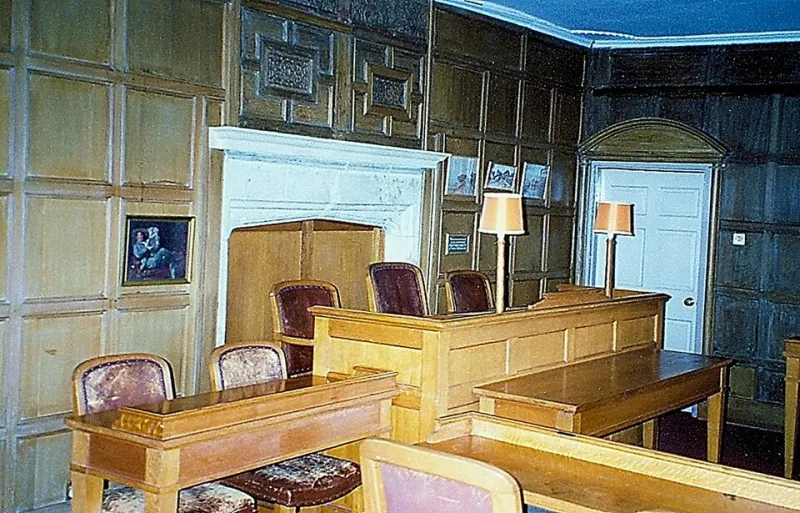
Photo: Avtar Sehmbi, CC BY-SA 4.0, via Wikimedia Commons
A crisis statement is rarely judged on the quality of its drafting alone. It is judged on whether it arrives in time, whether it says something true, and whether it sounds like the organisation that issued it. Yet many UK boards still treat crisis language as a task to be completed only when an incident occurs. The result is predictable: a first draft produced late at night, reviewed by too many people, and diluted until it resembles every other corporate apology of the past decade.
The alternative is not a rigid template. It is a rehearsal routine. The aim is to build a small stock of tested language before it is needed, so that the leadership team begins a live incident with a furnished mind rather than a blank page.
Why the first hundred words matter most
In the early hours of an incident, attention is finite. Journalists need a line. Customers need reassurance. Regulators need to see that the organisation understands the seriousness of the matter. Staff need to know what they should and should not say.
A short, early statement does not need to answer every question. It does need to do three things: acknowledge what is known, state what is being done, and indicate when more will be said. The discipline lies in resisting the urge to speculate, to minimise, or to hide behind process language.
That is why the rehearsal should focus on the first hundred words. Those words set the tone for everything that follows. If they are evasive, subsequent statements will be read through the same filter. If they are clear and human, the organisation buys itself time to establish the facts.
Choose three scenarios, not thirty
A common failure in crisis planning is to attempt exhaustive coverage. Boards commission long risk registers and scenario libraries, then discover that none of the language has been pressure-tested by the people who would actually have to deliver it.
A more useful approach is to select three plausible scenarios that would require a public statement within twenty-four hours. For a UK professional-services firm, those might include a serious data breach affecting client records, a senior partner's sudden departure amid disputed circumstances, or a regulatory enquiry into a business area that attracts media interest. The scenarios should be uncomfortable but credible. If the board cannot imagine the scenario happening, it will not rehearse it seriously.
Three is enough to expose the recurring tensions: what can be said before facts are confirmed, how much detail regulators expect, and where the boundary lies between transparency and legal risk.
Write the first hundred words for each
Once the scenarios are chosen, the chief executive or chair should draft the opening statement for each, unaided by communications staff. This is not an exercise in literary composition. It is a test of whether the leadership team can articulate the organisation's position under mild pressure.
The draft should be limited to one hundred words. That constraint forces clarity. It also mirrors the length of a holding statement that might be read aloud at a reception desk or posted on a website before a full response is ready.
After the draft is written, the communications lead should mark it against three questions. Does it acknowledge the issue without admitting liability? Does it explain the immediate action being taken? Does it tell stakeholders when they will hear more? A draft that fails any of these tests is not necessarily wrong, but it requires a deliberate decision about why.
Test the language against three scrutiny lenses
The value of the rehearsal lies in the scrutiny that follows. Each draft should be read by three functions, each with a different concern.
Legal counsel will look for admissions, speculation and unintended contractual commitments. Their role is not to produce the statement but to identify where language creates exposure. Regulators, where relevant, will expect candour about the facts and a clear account of remediation. Stakeholders, including employees and clients, will read the same words for evidence of competence and care.
The point is not to produce a single draft that satisfies everyone. It is to surface the tensions early, so that when a real incident occurs, the leadership team understands where the pressure points will be. A statement that has been tested in calm weather is less likely to collapse under the weight of competing edits at two in the morning.
What good crisis language sounds like
Good crisis language is specific, direct and proportionate. It avoids the passive voice where responsibility is clear. It does not describe a serious matter as an "isolated incident" before the facts support that conclusion. It does not promise more than the organisation can deliver.
Consider the difference between two openings. The first reads: "We are aware of reports concerning our data systems and are taking the matter seriously. The security of our clients' information is our highest priority." The second reads: "On Tuesday evening we identified unauthorised access to a client records system. We have isolated the affected systems, notified the Information Commissioner's Office, and engaged independent forensic specialists. We will update affected clients by Friday."
The first is boilerplate. It could have been written by anyone, about anything. The second is a statement. It demonstrates that the organisation knows what has happened, has taken control, and has a timeline. It is not necessarily complete, but it is credible.
The board's role is to rehearse, not to write
Directors should not be in the business of drafting press statements during an incident. Their role is to ensure that the organisation has rehearsed its language, understands the trade-offs, and has a clear protocol for who speaks and when.
A useful board exercise is to review the three rehearsed statements at a scheduled meeting, not as a communications matter but as a governance one. The questions are straightforward: does this language reflect the organisation's values? Does it create legal or regulatory exposure? Does it give the leadership team a credible starting point?
The answers will not eliminate the difficulty of a real crisis. But they will reduce the risk that the first statement is written from scratch, by exhausted people, under pressure to say something immediately. In a crisis, the words that matter most are often the ones prepared long before anyone needed them.